A healthy scalp is essential for maintaining strong, healthy hair. However, not everyone has the same scalp condition. Some people produce excess oil, while others struggle with dryness, itching, and flaking. Understanding the difference between these conditions helps you choose the right hair care routine and treatment.
Oily scalp vs. dry scalp is a common concern because both conditions can cause discomfort, itching, and visible flakes. However, their causes and treatment approaches are different. Using products that are unsuitable for your scalp type may worsen the problem rather than improve it.
In this blog, we will explore the causes, symptoms, key differences, and effective treatment approaches for oily and dry scalp.
What Is an Oily Scalp?
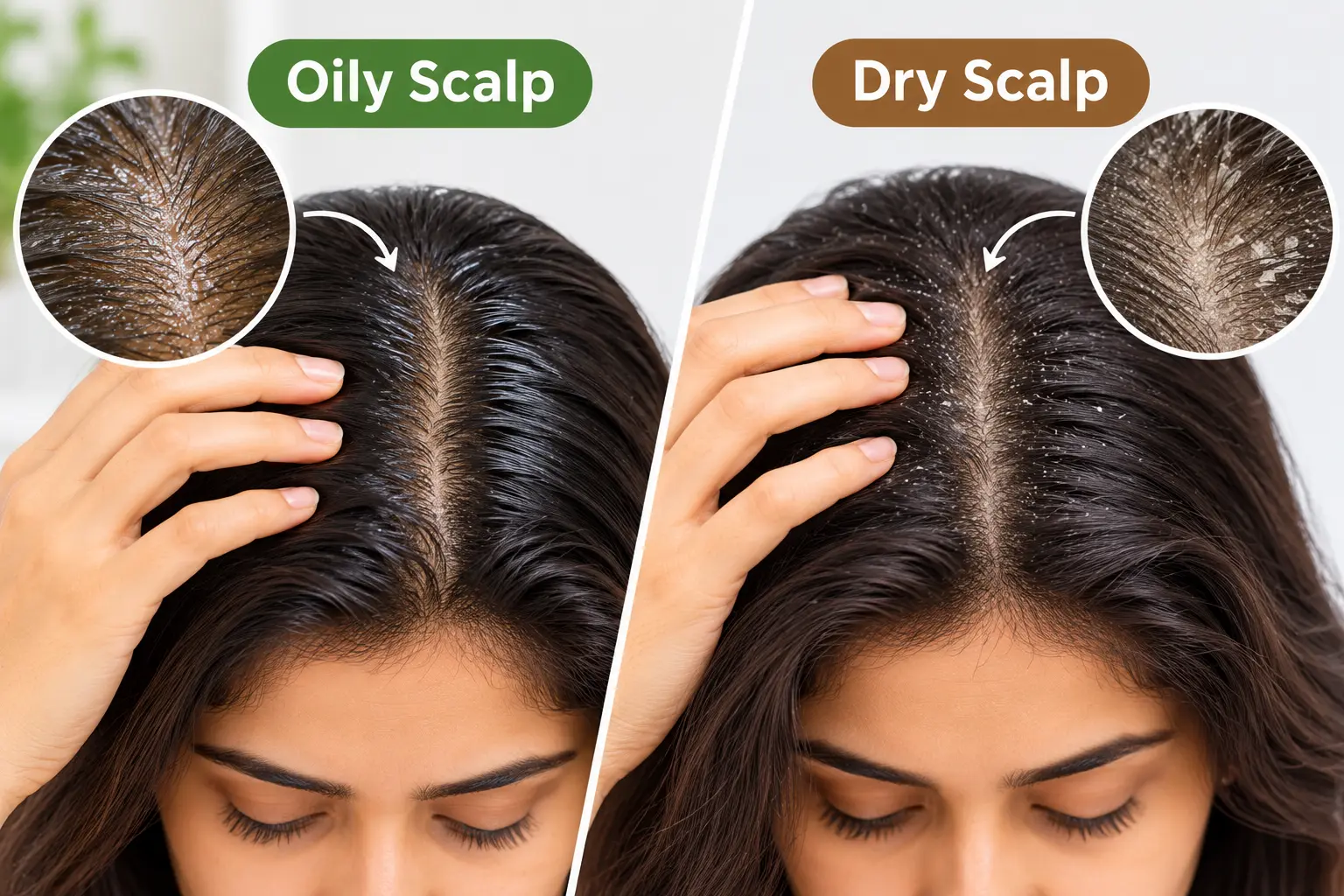
An oily scalp develops when the sebaceous glands produce excess sebum, the natural oil that helps protect and moisturise the scalp and hair. Although sebum is essential for scalp health, excessive production can make the hair look greasy, flat, and difficult to manage.
People with an oily scalp may notice that their hair becomes greasy shortly after washing. In some cases, excess oil can also contribute to product buildup and dandruff-like flakes.
Oily Scalp Causes
An oily scalp can develop due to a combination of factors.
- Excess Sebum Production: Overactive sebaceous glands produce more natural oil than the scalp needs.
- Hormonal Changes: Changes in hormone levels during puberty, menstruation, and different stages of life can stimulate excess oil production in the scalp.
- Genetics: Some people naturally have more active sebaceous glands due to their genetic makeup.
- Frequent Hair Product Use: Heavy conditioners, styling products, and oil-based products can accumulate on the scalp.
- Environmental Factors: Hot and humid weather can make the scalp feel oilier and increase sweating.
- Improper Hair Care Routine: Infrequent cleansing or using unsuitable hair care products may contribute to oil buildup.
Common Symptoms of an Oily Scalp
- Hair becomes greasy quickly after washing.
- Scalp feels sticky or oily.
- Hair appears flat and lacks volume.
- Yellowish or greasy flakes may develop.
- Scalp itching and irritation may occur.
What Is a Dry Scalp?
A dry scalp occurs when the skin on the scalp loses too much moisture or does not retain enough hydration. This can make the scalp feel tight, uncomfortable, and irritated.
Unlike an oily scalp, a dry scalp produces insufficient moisture or experiences increased moisture loss. It may also develop small, white flakes that fall easily onto the shoulders.
Dry Scalp Causes
Understanding the dry scalp causes can help identify the right treatment and prevent recurring dryness.
- Lack of Moisture: Insufficient hydration can contribute to dry and uncomfortable scalp skin.
- Cold or Dry Weather: Low humidity and cold temperatures can increase moisture loss from the scalp.
- Harsh Hair Care Products: Shampoos containing strong cleansing ingredients may strip away natural oils.
- Excessive Hair Washing: Washing hair too frequently can remove the scalp’s protective natural oils.
- Hot Water: Regularly washing hair with very hot water can worsen scalp dryness.
- Skin Conditions: Conditions such as eczema and psoriasis may cause dryness, irritation, and flaking.
Common Symptoms of a Dry Scalp
- Persistent dryness and tightness.
- Small, white flakes on the scalp.
- Itching and irritation.
- Rough or sensitive scalp skin.
- Hair may feel dry and lack natural shine.
Difference Between Oily and Dry Scalp
Although both conditions can cause itching and flaking, they have different characteristics. Recognising these differences helps you choose appropriate scalp care products and treatments.
| Features | Oily Scalp | Dry Scalp |
| Sebum production | Excessive | Often insufficient |
| Scalp condition | Greasy and sticky | Dry and tight |
| Flakes | Often greasy or yellowish | Usually small and white |
| Hair appearance | Flat and oily | Dry and dull |
| Common discomfort | Itching and buildup | Itching and irritation |
| Main care approach | Gentle cleansing and oil control | Moisturising and hydration |
Important: Dandruff and dry scalp are not the same condition. Dandruff is often associated with excess oil and the growth of Malassezia yeast, while dry scalp is generally related to moisture loss. A proper scalp assessment can help distinguish between them.
How to Treat Oily and Dry Scalp
The most suitable treatment varies based on the cause and specific needs of your scalp. A suitable hair care routine can help manage symptoms and maintain scalp health.
Treatment Approaches for Oily Scalp
1. Use a Suitable Shampoo
Choose a gentle shampoo formulated for oily scalps. Washing your hair regularly helps clear excess oil, sweat, and accumulated hair products from the scalp.
2. Maintain a Consistent Washing Routine
Wash your hair according to how quickly your scalp becomes oily. People with excessive oil production may need more frequent washing.
3. Avoid Heavy Hair Products
Limit the use of thick conditioners, heavy oils, and styling products directly on the scalp, as they can increase buildup.
4. Clean Your Scalp Properly
Massage shampoo gently into the scalp to remove accumulated oil and impurities. Avoid scrubbing the scalp too harshly, as it can lead to irritation and discomfort.
5. Seek Professional Treatment
If excessive oiliness is accompanied by persistent itching, inflammation, or unusual hair shedding, consult a hair care specialist to identify the underlying cause.
Treatment Approaches for Dry Scalp
1. Choose a Moisturising Shampoo
Use mild, hydrating shampoos that cleanse the scalp without excessively stripping away its natural oils.
2. Use Appropriate Scalp Moisturisers
Scalp-friendly moisturising products can help improve hydration and reduce dryness and discomfort.
3. Avoid Hot Water
Wash your hair with lukewarm water to minimise moisture loss and prevent further scalp irritation.
4. Reduce Harsh Chemical Treatments
Frequent colouring, chemical treatments, and excessive heat styling can contribute to dryness. Limit these practices when your scalp is irritated.
5. Identify Underlying Skin Conditions
If dryness, itching, or flaking continues despite regular care, seek professional advice. Skin conditions like eczema and psoriasis may need appropriate medical care and treatment.
When Should You Consult a Hair Care Specialist?
Occasional scalp dryness or oiliness can often be managed with simple hair care adjustments. However, persistent symptoms may indicate an underlying scalp or hair health concern.
Consider professional consultation if you experience:
- Continuous scalp itching or irritation.
- Excessive oiliness even after regular washing.
- Persistent dandruff or flaking.
- Redness, inflammation, or scalp sensitivity.
- Unusual hair thinning or excessive hair fall.
- Scalp dryness that does not improve with moisturising products.
A professional scalp examination can help identify the underlying issue and determine the most suitable treatment approach.
Get Expert Hair Care at IESH Ayurveda & Cosmetology Clinic
IESH Ayurveda & Cosmetology Clinic provides professional skin and hair care services at its Thrissur and Calicut locations. We understand that every scalp has different needs, and choosing the right treatment starts with identifying the underlying cause of the problem.
Whether you are experiencing excessive scalp oiliness, dryness, dandruff, or hair fall, our approach focuses on understanding your scalp condition and recommending suitable care.
At IESH, we focus on:
- Professional scalp and hair assessments.
- Identifying possible causes of scalp dryness and excessive oil production.
- Personalised hair care recommendations.
- Treatments for various hair and scalp concerns.
- Guidance on maintaining long-term scalp and hair health.
If you are looking for the best hair care clinic in Thrissur & Calicut, IESH offers professional care to help you address your hair and scalp concerns with an appropriate treatment plan.
Visit IESH Ayurveda & Cosmetology Clinic to get expert guidance for healthier hair and a healthier scalp.
Conclusion
Understanding the difference between oily and dry scalp is the first step towards maintaining healthy hair. While an oily scalp requires proper oil management, a dry scalp needs adequate hydration and gentle care.
Avoid following the same hair care routine for both conditions. Identifying your scalp type, choosing suitable products, and seeking professional guidance when necessary can help prevent recurring scalp problems.
For persistent scalp concerns, consult a hair care specialist at IESH Ayurveda & Cosmetology Clinic in Thrissur or Calicut to understand your scalp condition and explore suitable treatment options.
FAQs
1. How can I identify whether I have an oily or dry scalp?
An oily scalp usually feels greasy, and hair becomes oily quickly after washing. A dry scalp generally feels tight, itchy, and uncomfortable, with small white flakes.
2. Can an oily scalp cause hair fall?
Excessive oil production alone does not necessarily cause hair fall. However, associated scalp conditions, inflammation, and buildup may affect scalp health and contribute to hair-related concerns.
3. Can a dry scalp cause dandruff?
Dry scalp can cause flaking that looks similar to dandruff. However, dandruff is a separate condition commonly associated with excess oil and Malassezia yeast.
4. Can I have an oily scalp and dry hair at the same time?
Yes. It is possible to have an oily scalp with dry hair ends. This happens because scalp oil does not always distribute evenly along the hair strands.